A friend of mine from Lahore spent three years doing a BBA degree, graduated, sent out maybe 200 CVs, and ended up working at a call center for Rs. 25,000 a month. Meanwhile, his younger brother, who dropped out of college, spent eight months learning web development on YouTube and landed a remote job with a UK-based startup earning $800/month. Same household, completely different outcomes.
That contrast stuck with me. And it’s not a one-off story. I’ve seen this pattern repeat across Pakistan — from Karachi to Multan to Peshawar. Web development has genuinely become one of the most accessible, high-paying career paths available right now, and 2026 is shaping up to be an even bigger year for it.
Let me break this down properly: salaries, skills, job market, freelancing, everything you actually need to know.
The Job Market Reality in 2026
Pakistan’s IT sector has been growing consistently, and web development sits right at the center of that growth. Companies — from e-commerce startups to fintech firms to media houses — all need web developers. And the demand isn’t slowing down.
Local job platforms like Rozee.pk and Mustakbil.com regularly list hundreds of web developer openings. If you filter by “web developer” on any given week, you’ll find positions ranging from junior frontend roles to full-stack senior positions with international remote work options.
But here’s what most career guides won’t tell you: the real money for Pakistani developers isn’t in local jobs it’s in remote work and freelancing. More on that shortly.
What Kind of Web Developer Jobs Exist?
Before jumping into salaries, it helps to understand the landscape. Web development isn’t one job — it’s several.
Frontend Developer: You build what users see. Buttons, layouts, animations, the whole visual experience. Tools of the trade: HTML, CSS, JavaScript, and frameworks like React or Vue.js.
Backend Developer: You handle the server side. Databases, APIs, authentication, the logic that makes apps actually function. Common stacks: Node.js, PHP/Laravel, Python/Django.
Full Stack Developer: You do both. Most in-demand, most paid, most exhausting to learn — but worth it.
WordPress Developer: Underrated and massively in demand. Tons of small businesses and freelance clients need WordPress websites. Easier to learn, quicker to monetize.
Shopify / E-commerce Developer — Growing fast in Pakistan. As more local brands move online, Shopify development skills are becoming genuinely valuable.
Salary Breakdown: What’s Actually Happening in 2026
Let me give you real numbers, not padded estimates.
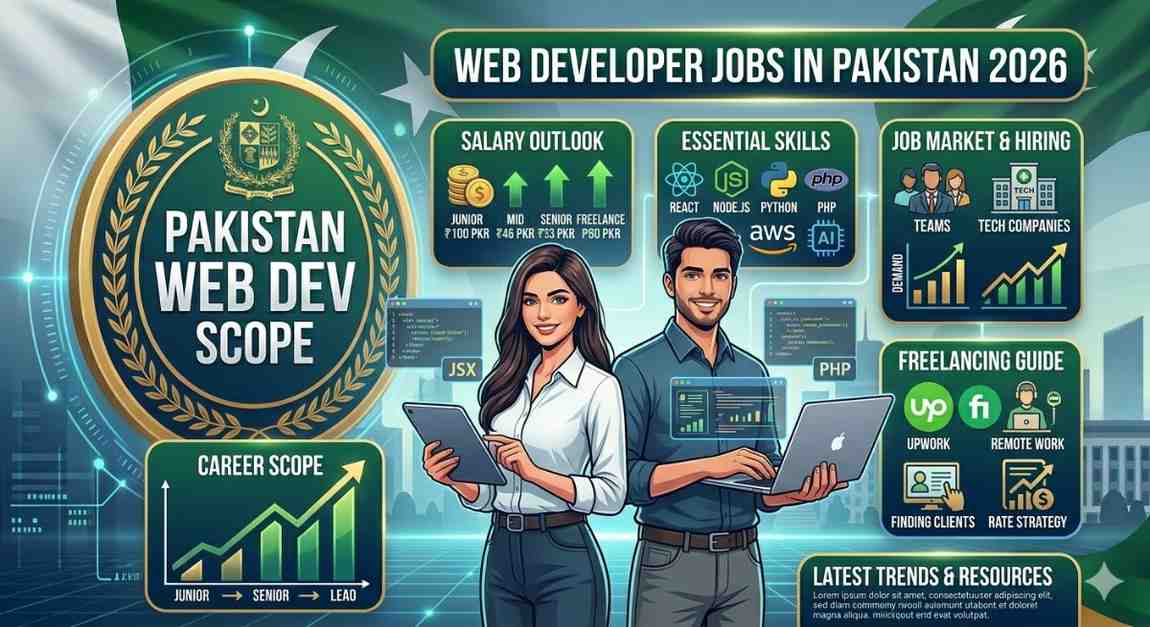
Junior Web Developer (0–1 year experience): Rs. 40,000 – Rs. 70,000/month in local companies. Some startups pay less, some established software houses pay more, depending on your skills.
Mid-Level Developer (2–3 years): Rs. 80,000 – Rs. 150,000/month. This is where things start getting comfortable. A React developer with a solid portfolio at this level can negotiate well.
Senior Developer (4+ years): Rs. 180,000 – Rs. 350,000+/month. Senior full-stack developers at Pakistani product companies or working remotely for foreign clients earn significantly more.
Remote / International Jobs: This is the real game changer. A Pakistani developer working for a US or European company earns in dollars. Even an entry-to-mid level role at $1,500–$2,500/month translates to Rs. 400,000–700,000 at current exchange rates. Senior roles go much higher.
Skills That Actually Get You Hired
I’ve talked to hiring managers at software houses in Lahore and Karachi, and the feedback is consistent — they’re not just looking for someone who “knows HTML.” They want people who can ship real projects.
Here’s what you genuinely need to focus on:
Start with the fundamentals seriously: HTML, CSS, and JavaScript are not optional starting points. I’ve met developers who jumped straight into React without understanding JavaScript properly, and it shows. Every interviewer will catch it.
Pick a framework and go deep: For frontend, React is the most in-demand right now. For backend, Node.js with Express or PHP with Laravel are both solid choices in Pakistan’s job market.
Learn Git from day one: I cannot stress this enough. Version control is not optional. GitHub is your portfolio. Every company uses it. Not knowing Git in 2026 is like not knowing how to send email.
Understand databases: At minimum, know how MySQL or PostgreSQL works. Learn basic queries, understand relationships between tables. If you’re going full-stack, also learn MongoDB for NoSQL projects.
Build real projects: A portfolio with three solid, real-looking projects beats a CV listing ten courses. Build a working e-commerce site, a weather app pulling from an API, a blog with user authentication — things that show you can actually build something from scratch.
APIs and REST: Almost every modern web app communicates through APIs. Learn how to build and consume them. This is a non-negotiable skill in 2026.
The Freelancing Side Where Pakistanis Are Actually Winning
Pakistan is consistently among the top freelancing countries globally. Platforms like Upwork, Fiverr, Toptal, and PeoplePerHour have thousands of Pakistani developers actively earning.
Fiverr works well for WordPress, landing pages, and smaller fixed-price projects. Upwork is better for ongoing contracts and higher-value work.
Here’s the honest freelancing timeline that nobody talks about: the first three months are brutal. You send proposals, get ignored, wonder if it’s working. Then you land your first small gig, maybe a $50 WordPress fix. Then a $150 landing page. Slowly, reviews build up, and things start moving.
One mistake I see constantly: people create profiles on five platforms simultaneously and get nowhere on any. Pick one, ideally Upwork or Fiverr — and go all in until you have consistent work.
One more thing about freelancing in Pakistan: payment methods matter. Most successful freelancers use Payoneer or Wise to receive international payments. Both work well in Pakistan and are easy to set up. Don’t wait until you land your first gig to figure out payments — sort this out early.
Step-by-Step Path If You’re Starting from Zero
If you’re sitting there wondering where to even begin, here’s a realistic roadmap:
Months 1–2: HTML, CSS, basic JavaScript. Use freeCodeCamp (completely free, excellently structured path). Build three simple static websites.
Months 3–4: Dive deeper into JavaScript. DOM manipulation, fetch API, ES6 features. Start using VS Code properly; learn shortcuts, install useful extensions like Prettier and Live Server.
Months 5–6: Learn React (for frontend) or Laravel (for backend), depending on which direction calls you. Follow official documentation alongside YouTube tutorials. Traversy Media and The Net Ninja channels on YouTube are genuinely excellent.
Months 7–8: Git and GitHub, deploying projects (use Netlify for frontend, Railway or Render for backend — both free tiers). Build your portfolio site.
Month 9 onwards: Start applying for jobs and creating freelance profiles simultaneously. Don’t wait until you feel “ready”; you never will.
Mistakes That Set People Back
Watching tutorials without building: Tutorial hell is real. You can watch 200 hours of content and still not be able to build a login page from scratch. After every tutorial, close it and rebuild what you just learned without looking.
Hiding behind certifications: Certificates from Coursera or Udemy look okay on a CV but don’t impress hiring managers much. Your GitHub profile with actual projects matters far more.
Giving up at the first job rejection: I know someone who got rejected from 11 companies before landing a solid position at a Karachi software house. Now he’s earning Rs. 180,000/month two years later. Rejections are part of the process, not the end of it.
Not learning English communication: This hurts freelancers especially. Your technical skills can be great, but if you can’t communicate clearly with international clients, you’ll lose projects. Work on written English — it’s a professional skill, not just a school subject.
Career Scope Looking Ahead
Web development isn’t going anywhere. If anything, the scope is expanding. AI tools like GitHub Copilot are changing how developers work, but they’re making good developers faster, not replacing them. The demand for people who understand how to build, structure, and ship web applications remains strong.
Pakistan’s government has also been pushing IT exports, and several initiatives offer subsidized training and support for freelancers. The ecosystem is genuinely improving.
If you put in the work, stay consistent, and build real things, web development in 2026 is one of the most solid career bets you can make in Pakistan. Not because someone said so on a blog, but because the market data, the salaries, and the stories from real people around you already prove it.