My neighbor’s daughter studied commerce, graduated from a decent university in Karachi, and spent almost a year applying for jobs with zero luck. Then she got called for an interview at HBL. Within three weeks, she was in training. Six months later she had a confirmed position, a salary that shocked her parents, and medical coverage for her whole family. Her father told my uncle, “Banking mein aana chahiye tha pehle hi.”
That story isn’t unique. I’ve seen this happen multiple times. Private banking jobs in Pakistan carry a certain weight — stable salary, structured career growth, and a level of professional respect that’s hard to find in many other sectors. And in 2026, the demand for fresh and experienced banking professionals is very much alive.
If you’re seriously considering this path, let me walk you through everything that actually matters.
Why Private Banks Are Still One of the Best Employers in Pakistan
Government jobs get all the hype, but private banks quietly offer some of the best employment packages in the country. The salary structure is competitive, increments are performance-based, and the work environment pushes you to grow fast.
Banks such as HBL, UBL, MCB, Allied Bank, Bank Alfalah, Meezan Bank, and Habib Metropolitan operate nationwide, with thousands of branches. Every year they bring in fresh graduates, promote internal staff, and hire experienced professionals for specialized roles. The hiring never really stops; it just shifts in volume.
Meezan Bank in particular has been expanding aggressively because of the growth in Islamic banking demand across Pakistan. If you’re looking at 2026 opportunities, Islamic banking roles are genuinely worth targeting.
Types of Jobs Available in Private Banks
This is where most people get confused. They think “bank job” means sitting behind a counter. That’s one role out of dozens.
Teller / Cash Officer: Entry-level. You handle cash transactions, account opening assistance, and basic customer service. It’s how many people start, and there’s no shame in it. The experience is solid.
Relationship Manager: You manage a portfolio of customers, help them with financial products, and maintain long-term client relationships. This role pays well and has serious growth potential.
Credit Analyst: You assess loan applications, review financials, and determine credit risk. Requires analytical thinking and usually some finance background. Banks pay well for this.
Branch Manager: Typically a mid to senior role. You oversee the entire branch operation. Getting here usually takes five to seven years of consistent performance.
IT and Digital Banking Roles: As banks go more digital, the need for software developers, cybersecurity professionals, and data analysts within banking has grown significantly. If you’re from a tech background, this entry point is very real in 2026.
Compliance and Risk Officers: State Bank of Pakistan regulations require every bank to maintain compliance departments. These roles are technical, often well-paid, and have strong job security.
HR, Marketing, and Operations: Every bank runs internal support departments. Business graduates with specialization in HR or marketing can target these roles directly.
Salary Breakdown for 2026
Let me be straightforward about numbers, because vague answers don’t help anyone.
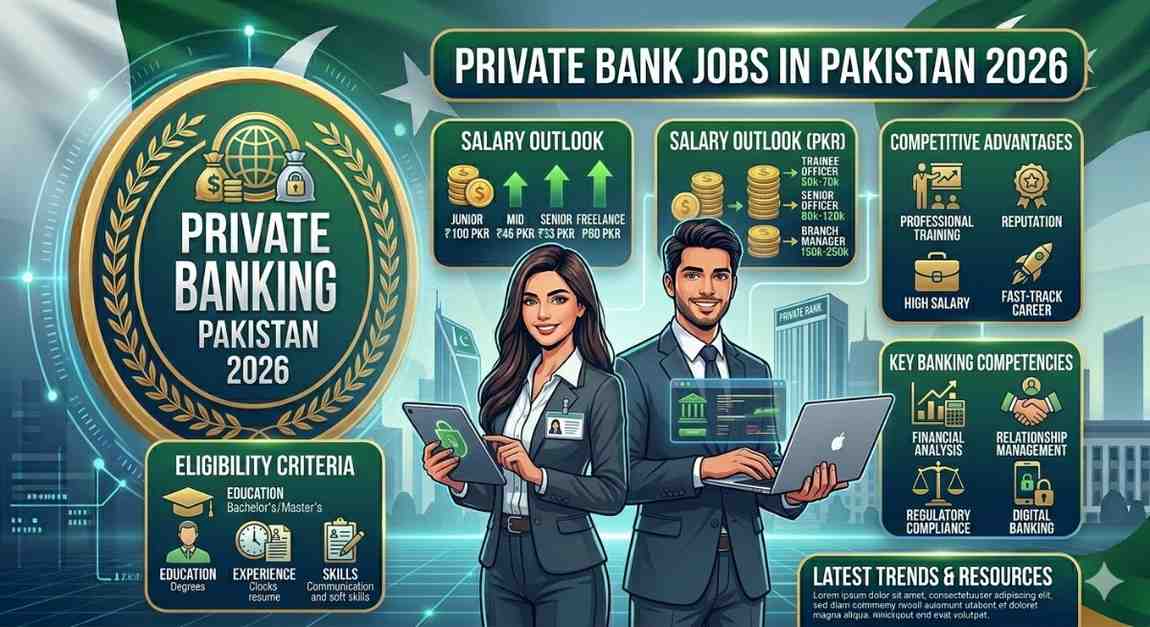
A fresh graduate hired as a Management Trainee Officer (MTO) typically starts between Rs. 60,000 and Rs. 90,000 per month. Some top-tier banks like HBL and UBL offer packages touching Rs. 100,000 for their MTO programs when you factor in allowances.
After two to three years with a confirmed officer grade, salaries comfortably move into Rs. 100,000 to Rs. 180,000 territory depending on your grade and bank.
Relationship Managers handling corporate or SME portfolios earn Rs. 150,000 to Rs. 300,000 at senior levels, plus performance bonuses that can be significant.
Branch Managers at established banks earn Rs. 250,000 to Rs. 450,000 monthly, sometimes more in high-performing urban branches.
Beyond base salary, private banks typically offer fuel allowance, medical insurance covering your immediate family, provident fund, and annual bonuses. These benefits add real value to the total package that people often undercount when comparing jobs.
Eligibility Criteria: What Banks Actually Require
For Entry Level / MTO Programs
Minimum: a bachelor’s degree, preferably in Business Administration, Commerce, Economics, Finance, or related fields. Some banks accept any discipline for general banking roles.
CGPA expectations vary. Some banks explicitly ask for 2.5 or above; others don’t mention it but prefer candidates from recognized HEC-listed universities.
Age limit is usually between 24 and 28 years for fresh MTO batches, though some banks go up to 30.
Good communication skills are non-negotiable. Banks deal with customers constantly. If you struggle to hold a confident conversation, work on that before applying.
For Experienced Roles
Relevant experience in the specific function you’re applying for. A credit analyst position will expect you to have worked in credit before, for example.
Professional certifications help significantly. ACCA, CFA Level 1, CAMS (for compliance), or even a master’s degree can separate you from other applicants.
How to Apply: A Realistic Step-by-Step
Step one: Build a clean, targeted CV. Banking HR departments go through hundreds of applications. Your CV should be one page if you’re a fresh graduate, maximum two pages for experienced candidates. Highlight relevant coursework, internships, and any finance-related projects. Avoid decorative templates with too many colors; clean and readable wins.
Step two: Use the right platforms: Rozee.pk, LinkedIn, and the official careers pages of individual banks are your primary sources. Meezan Bank, HBL, and Bank Alfalah regularly post openings on their own websites. Set up job alerts on LinkedIn with keywords like “Management Trainee Officer Pakistan” or “Bank Officer Karachi/Lahore” so you don’t miss batches.
Step three: Apply for MTO programs specifically. Most major banks run structured Management Trainee Officer programs once or twice a year. These are designed for fresh graduates and include formal training. Getting into one gives you a proper foundation and fast-tracks your career compared to joining as a general hire.
Step four: Prepare for the written test. Banks typically conduct their own aptitude tests or use third-party assessment companies. The tests cover quantitative reasoning, verbal ability, English comprehension, and sometimes basic financial knowledge. Past sample papers are available online — search specifically for “HBL MTO test” or “UBL aptitude test,” and you’ll find practice material on various Pakistani educational forums.
Step five: Nail the interview: Panel interviews are common in banking. They test your confidence, communication, and situational judgment. Prepare answers to questions like “why banking,” “tell me about a time you handled a difficult situation,” and basic questions about the bank you’re applying to. Knowing what the bank does, its history, and recent news about it shows genuine interest.
Mistakes That Cost People Good Opportunities
Applying without researching the bank is one I see constantly. Walking into an HBL interview without knowing that it’s Pakistan’s largest bank, or not knowing what Islamic banking means when interviewing at Meezan, will damage your impression immediately.
Dressing casually for interviews is another one. Banking is still a formal environment. A properly ironed shalwar kameez or a decent suit matters. First impressions in banking interviews carry unusual weight.
Waiting for the “perfect” job before applying is a trap many fresh graduates fall into. The girl from my neighborhood didn’t get her dream role immediately; she started as a teller, proved herself, and moved up within 18 months. Entry points matter less than how you perform once you’re in.
Neglecting English communication is a recurring problem. Internal emails, client communication, and report writing in banks happen primarily in English. Work on your written English seriously read business news on Dawn or The News regularly, and practice writing structured emails.
Career Scope Where This Actually Goes
Banking careers in Pakistan have a clear upward path if you perform. The structure is well-defined: officer grades, management grades, senior management. Each promotion brings salary jumps and more responsibility.
After five to eight years of solid experience, Pakistani banking professionals also become attractive to international markets. The Gulf region, especially the UAE and Bahrain, actively recruits Pakistani banking professionals with Islamic finance backgrounds.
Some people also transition into State Bank of Pakistan roles, development finance institutions, or microfinance banks, using their commercial banking experience as a foundation.
The Islamic banking sector specifically is going to keep growing through 2026 and beyond as regulatory frameworks in Pakistan push more toward Shariah-compliant products. Getting into Islamic banking now means positioning yourself in an expanding market rather than a saturated one.
Private banking in Pakistan isn’t a glamorous shortcut to wealth; it’s a structured, professional career that rewards consistency, people skills, and continuous learning. But for those who commit to it, it delivers financial stability and professional growth that’s genuinely hard to match in most other sectors.