When my younger brother finished his intermediate exams and couldn’t get into any university that year, the family was stressed. He had six months to fill and no clear plan. A family friend suggested he try a call center job in Lahore while figuring things out. He was skeptical, honestly embarrassed about it, assumed it was some low-level job with no future. He joined anyway because he needed income.
That was three years ago. Today he’s a team lead managing 12 agents at an international BPO company, earning over Rs. 120,000 a month, with better English communication skills than most university graduates I know. What started as a temporary fix became a legitimate career.
Call center jobs in Pakistan carry an unfair reputation. People underestimate them. But if you actually step inside this industry and understand how it works, the picture looks very different from what most people assume.
The Call Center Industry in Pakistan Right Now
Pakistan has become a significant player in the global BPO (Business Process Outsourcing) market. Cities like Karachi, Lahore, and Islamabad have dozens of established call centers handling international clients from the US, UK, Canada, and Australia.
Companies like Ibex, Mindbridge, TRG Pakistan, Alorica, and Taskus operate large facilities here with thousands of employees. These aren’t small operations. Some of these centers run 24/7 across multiple shifts and actively hire throughout the year.
Local call centers also exist serving Pakistani telecom companies, banks, courier services, and e-commerce platforms. Telenor, Jazz, Daraz, and various courier companies all maintain customer service teams that are essentially call center operations.
In 2026, hiring in this sector remains consistent. The nature of the work means turnover is relatively high, which sounds negative but actually means job availability stays strong for new applicants.
What a Call Center Agent Actually Does Every Day
People picture someone just picking up phones and saying hello. The actual work is more layered than that.
An inbound agent receives calls from customers who need help. Someone’s internet isn’t working, a payment didn’t go through, a package hasn’t arrived. Your job is to listen, understand the problem, and resolve it as efficiently and politely as possible. The challenge is doing this while someone is frustrated, sometimes rude, and expecting instant solutions.
An outbound agent makes calls rather than receiving them. This includes sales calls, follow-ups, surveys, appointment setting, and lead generation. Outbound work requires more resilience because rejection is constant. You get hung up on regularly. The ones who handle that well tend to earn more through commissions.
Chat and email support has grown significantly. Many call centers now handle customer service through live chat on websites or email tickets. Same core skill, different medium.
Quality assurance roles exist within call centers too, where experienced agents review calls and grade performance. It’s a step up from frontline work and usually comes with a pay increase.
Salary Breakdown for 2026
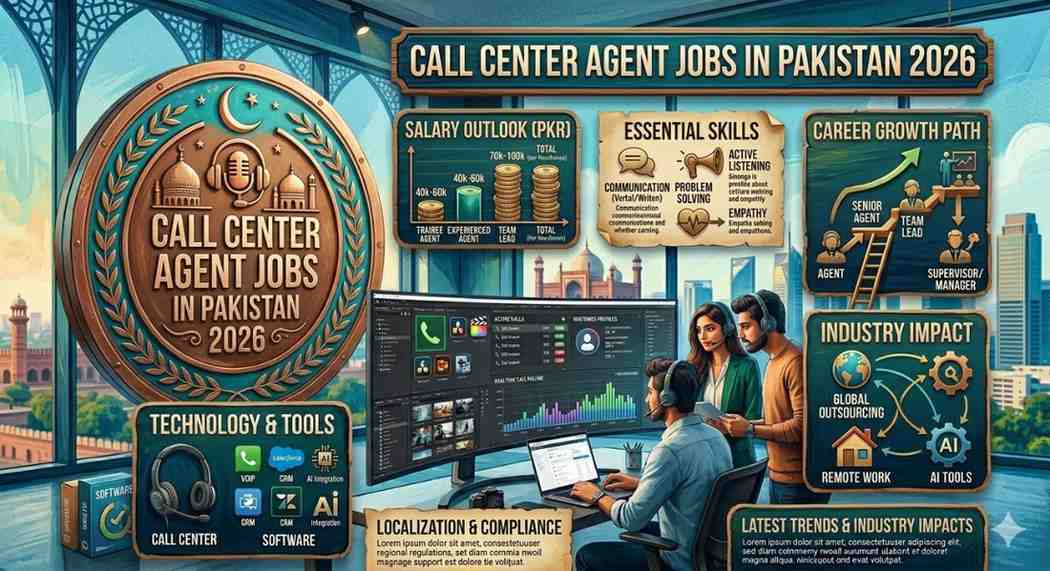
Fresh agents at local call centers typically start between Rs. 25,000 and Rs. 45,000 per month. International process agents, meaning those handling US or UK customers, generally earn more, often starting at Rs. 45,000 to Rs. 70,000 because the language and communication demands are higher.
Night shift allowances are common since international campaigns run on foreign time zones. A call center agent working the graveyard shift might receive an additional Rs. 5,000 to Rs. 15,000 on top of base salary.
Commission structures in outbound sales can significantly boost monthly earnings. A solid sales agent consistently hitting targets can earn double their base salary through commissions. I’ve personally met agents in Karachi clearing Rs. 100,000 monthly once commissions were factored in.
Team leads and supervisors earn Rs. 80,000 to Rs. 150,000 depending on the company and process. Quality analysts, trainers, and operations managers go higher.
The earning trajectory is steeper than people expect when they start. Within two years of consistent performance, you can move well beyond entry-level pay.
Skills That Actually Matter for Getting Hired
The number one skill is communication, specifically the ability to speak clearly and listen carefully. This sounds basic, but most applicants underestimate how much it matters. During hiring, managers are evaluating your voice, your clarity, your confidence, and your ability to think while speaking.
For international processes, English fluency is essential. Not perfect grammar necessarily, but clear, understandable spoken English with an accent that international callers can follow. My brother practiced by watching American sitcoms daily for two months before his interview. It genuinely helped.
Patience is a soft skill that gets tested constantly. Angry callers, repetitive questions, technical issues outside your control, difficult customers. The agents who stay calm and professional through all of that are the ones who get promoted.
Basic computer skills matter more than people realize. You’ll be using CRM software, ticketing systems, internal dashboards, and sometimes multiple screens simultaneously. Being comfortable navigating software quickly while talking makes your job significantly easier.
Problem-solving ability is valued especially for technical support roles. You’re often working from a knowledge base of solutions, but knowing how to apply the right fix in real time requires thinking, not just reading from a script.
How to Get Your First Call Center Job
Step one is to sort your documents. You’ll need your CNIC, educational certificates, and a recent photograph. Some companies also require a police clearance for international processes handling financial data.
Step two is to find the right openings. Rozee.pk lists call center jobs consistently. LinkedIn is useful for larger BPO companies that post directly. Olx sometimes has listings from smaller local call centers. Walking into a BPO company’s office with your CV still works at many places, especially in Karachi’s Shahrah-e-Faisal area and Lahore’s Gulberg, where many call centers are clustered.
Step three is the interview. Most call centers use a structured interview process that includes a voice assessment. You’ll be asked to introduce yourself, describe a situation, maybe do a mock call. Speak clearly, maintain a steady pace, and don’t rush. Practice introducing yourself out loud before you walk in.
Step four is training. Every call center runs a training period ranging from one to four weeks before you go live on calls. Pay serious attention during training. The agents who struggle most are usually the ones who checked out during this phase.
Step five is your first few weeks on the floor. This is the hardest period. Real calls are different from training scenarios. Accept that you’ll make mistakes, take notes on every tricky situation you encounter, and ask your team lead questions. Nobody expects perfection in week one.
Career Growth Inside the Call Center Industry
The path upward is clear once you’re inside. A consistent agent performing well gets noticed within six to twelve months. From agent, you move to senior agent, then team lead, then supervisor, then operations manager. Each step brings a meaningful pay jump and more responsibility.
Trainers are often recruited from high-performing agents who also communicate well. Quality analysts similarly come from the floor. Both are respected positions that keep you in the industry while stepping away from direct customer contact.
Some professionals move from BPO work into corporate customer service roles at banks, telecom companies, or e-commerce platforms. The experience transfers well because the core skills are identical.
International remote customer service is also a growing option. Some platforms like Working Solutions, Concentrix, and similar companies hire remote agents from Pakistan for online roles. Once you have documented call center experience, these opportunities become accessible.
Mistakes That Trip People Up Early
Treating the job as temporary from day one is the mindset that prevents growth. People who approach it as just something to do while waiting for something better tend to perform poorly and miss the opportunities that come to those who take it seriously.
Not managing energy for night shifts is a common struggle. The body genuinely takes weeks to adjust to inverted sleep schedules. New agents who don’t prioritize sleep, nutrition, and managing their routine outside work burn out quickly.
Taking rude callers personally kills your enjoyment of the job and your performance. The caller isn’t angry at you specifically. They’re frustrated about a situation. Creating mental separation between the call and your self-worth is something the best agents develop deliberately.
Skipping the habit of taking notes during training is a mistake that costs weeks of struggle later. Call center work involves memorizing processes, systems, and policies. Write things down from day one.
Where This Career Actually Goes
Three years ago, my brother was embarrassed to tell relatives he worked at a call center. Now he manages a team, travels occasionally for company training sessions, and is actively learning about operations management. He’s 23.
The call center industry in Pakistan isn’t a dead-end street. It’s a career with a real ladder, genuinely transferable skills, and earning potential that surprises most outsiders. If you walk in with the right attitude and the willingness to develop your communication skills seriously, 2026 is a perfectly solid time to build something real here.